Social Media Marketing

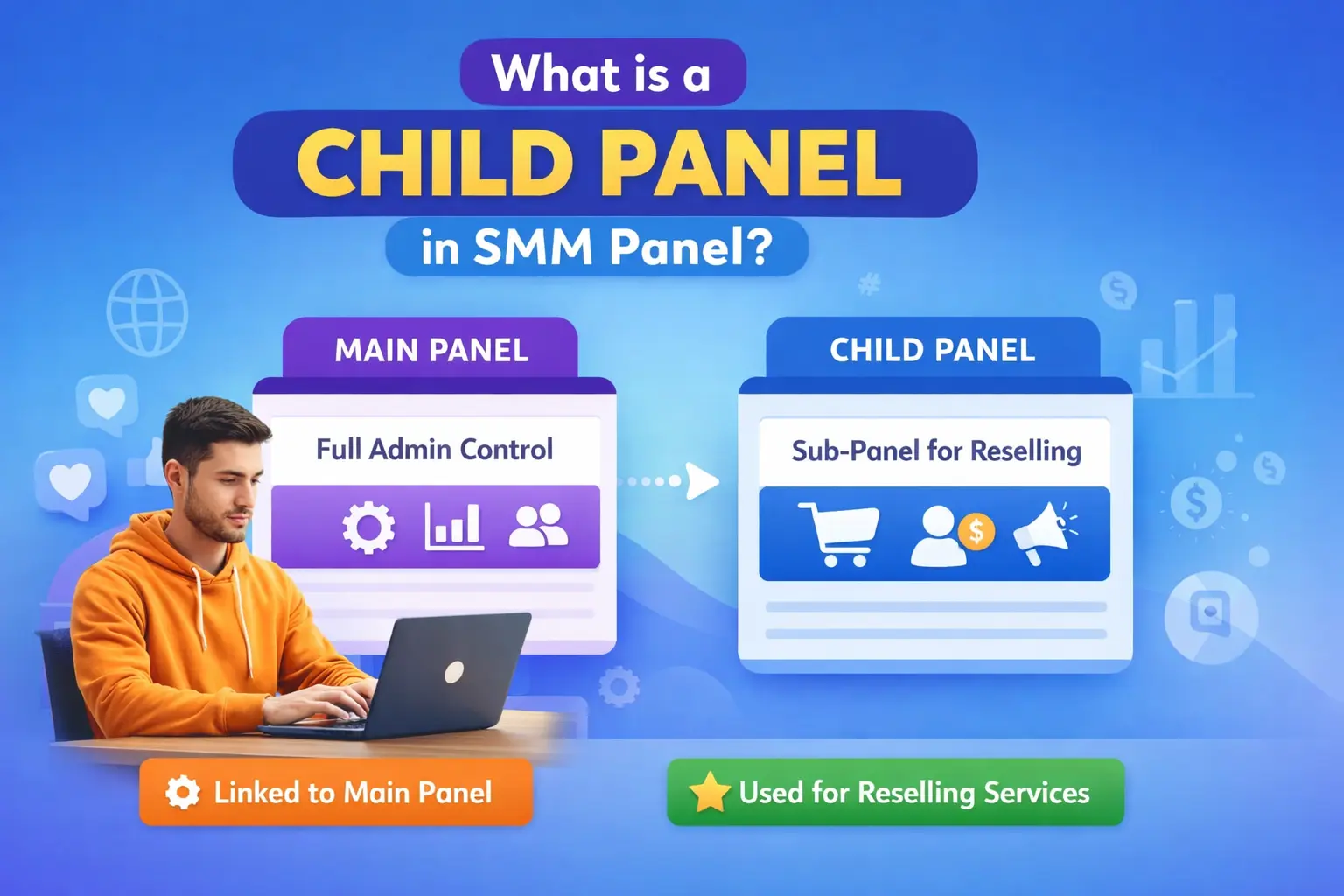
If you are exploring the world of social media marketing services, you have probably heard the term Child Panel in SMM Panel. It sounds technical. It feels complicated. But in reality, it is much simpler than most people think.A child panel is basically a ready made version of an existing SMM panel that you can rebrand and sell as your own.
Instead of building a system from scratch, you connect to a parent or main provider. That provider supplies all the services, such as Instagram followers, YouTube views, TikTok likes, and more. You focus on selling. They handle the backend.Think of it like opening a franchise restaurant.
Today, many entrepreneurs choose a Child Panel in SMM Panel instead of developing their own script because it saves time, money, and technical stress. Platforms like SMMVALY SMM Panel operate in this ecosystem by offering services that resellers and panel owners can access and redistribute.

What Is a Child Panel in SMM Panel?
A Child Panel in SMM Panel is a white label or reseller panel connected to a larger parent SMM panel through API integration. When someone places an order on your child panel website, the request is automatically sent to the main panel. The main panel processes the order and delivers the service. Your system updates the order status, and you keep the profit margin.
You control the pricing. For example, if the main panel sells 1000 Instagram followers for two dollars, you can sell the same service for four dollars. The difference becomes your profit. This model allows you to build your own brand identity without owning the infrastructure behind it.
The reason this system is popular is simple. Building a full SMM infrastructure requires technical skills, server management, and connections with multiple service providers. Most beginners do not have those resources. A child panel removes that barrier. It gives you access to ready-made services while you focus on sales and customer support.
How a Child Panel Works Behind the Scenes
When you run a Child Panel in SMM Panel, you are connected to a main provider via API. API stands for Application Programming Interface. It is simply a bridge between two systems.
Here is what happens step by step:
A customer places an order on your website.
Your panel automatically forwards that order to the main panel.
The main panel processes and delivers the service.
The order status updates on your panel.
You earn the price difference.
Child Panel vs Main Panel | What’s the Difference?
Understanding the difference between a child panel and a main panel will help you avoid confusion.
A main SMM panel
Owns or manages service sources
Controls pricing at wholesale level
Handles API distribution
Maintains servers and system updates
Deals with refill and cancellation systems
A Child Panel in SMM Panel
Resells services from a main panel
Sets its own prices
Does not control service quality
Does not manage infrastructure
Depends on the main panel’s reliability

Why SMM Providers Offer Child Panels
Main SMM providers offer child panels because it helps them scale faster. Instead of marketing in every country and language, they allow resellers to promote services locally. This creates a network effect where multiple child panels generate orders for the main system.
It works like wholesale and retail. The main provider focuses on infrastructure and bulk pricing. Resellers focus on customer acquisition. This division of roles allows both sides to grow.
For example, a provider like SMMVALY SMM Panel may concentrate on maintaining consistent service delivery, while resellers build local brands and attract clients in specific markets. This shared ecosystem benefits everyone involved.
Is a Child Panel Profitable?
Profitability depends on strategy, not just setup. A Child Panel in SMM Panel can generate income if you price services wisely and build customer trust. The profit comes from the difference between wholesale rates and your retail price.
However, success requires marketing effort. Simply launching a panel is not enough. You need traffic, clear branding, responsive customer support, and realistic service promises. Many beginners fail because they compete only on low prices without building credibility.
If you target local businesses, influencers, or agencies and offer consistent support, the model can create steady recurring income. Like any business, it rewards patience and planning rather than shortcuts.
Refill and Delivery Terms in Child Panels
Refill means replacing dropped followers or engagement within a set period.
Key terms to check:
Refill duration (7 days, 30 days, lifetime)
Delivery speed
Start time
Cancellation policy
Never promise your customers more than your provider offers.If your supplier offers a 30-day refill, do not advertise lifetime refill.That mismatch damages your reputation.

Drip Feed in Child Panels | Why It Matters
Drip feed allows gradual delivery instead of instant bulk delivery.
Why is this important?
Looks more natural
Reduces risk of drops
Mimics organic growth
Instead of 10,000 followers in one hour, you deliver 500 per day for 20 days.This looks more realistic.Not all services support drip feed. Always verify before advertising it.
Are Child Panels Safe and Legal?
Running a reseller website is legal in most countries as long as you follow local business laws and tax regulations. However, social media platforms have their own policies regarding artificial engagement. It is important to understand those terms before operating in this space.
Safety also depends on provider reliability. Secure payment gateways, transparent refill policies, and honest service descriptions reduce risk. Always test services before selling them to customers. A trustworthy provider protects your long-term reputation.
How to Choose a Reliable Child Panel Provider
Here is what to look for:
Stable API connection
Transparent pricing
Clear refill policy
Consistent delivery speed
Active customer support
Positive reputation
Secure payment options
Research reviews. Test services. Avoid providers with unrealistic claims.Your provider becomes your backbone.

Conclusion
A Child Panel in SMM Panel is a reseller model that allows you to start a social media marketing service business without building infrastructure from scratch.It lowers entry barriers. It reduces technical challenges. It shifts focus toward branding and marketing.
But success depends on smart provider selection, realistic pricing, and customer trust.If you treat it like a real business, not a quick-money scheme, it can become a steady income stream.
FAQS
What Is a Child Panel in SMM Panel?
It is a reseller panel connected to a main SMM provider through API, allowing you to sell services under your own brand.
Can I make money with a child panel?
Yes, profit comes from the price difference between your provider’s rates and your selling price..
Is a child panel better than creating my own SMM panel?
For beginners, yes. It requires lower investment and less technical work.
Is using a child panel safe?
It depends on the provider’s reliability and your compliance with local laws and platform policies.

Ready To Grow Faster With SMMVALY?
Join thousands of marketers, influencers, agencies and businesses using SMMVALY to boost their social media presence.
Start Growing Today